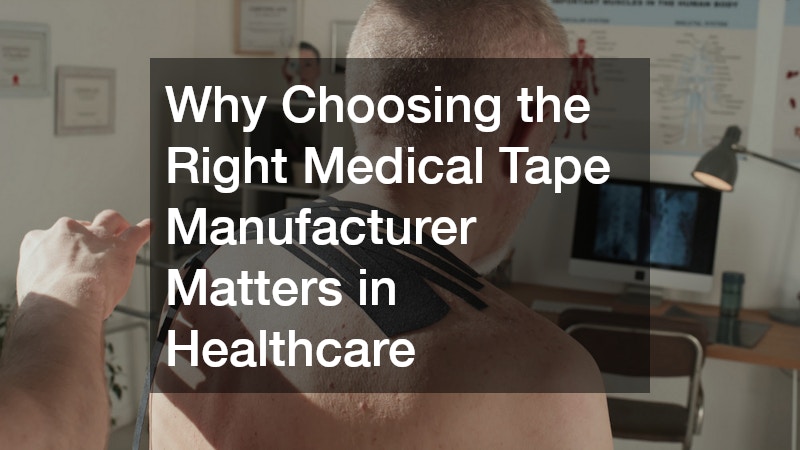
In healthcare settings, even the smallest materials can have a significant impact on patient outcomes. Adhesive products used in wound care, surgical procedures, and medical device applications must meet strict standards for safety, comfort, and reliability. Selecting a dependable medical tape manufacturer is essential for ensuring that these products perform consistently in critical environments where precision and hygiene are non-negotiable. Healthcare providers rely on these materials daily, meaning any variation in quality can directly affect patient comfort, healing time, and overall treatment effectiveness. As a result, the decision-making process for sourcing medical-grade adhesive products requires careful evaluation of both product specifications and supplier capabilities.
Quality and Safety Standards in Healthcare Applications
One of the most important considerations when evaluating medical adhesive products is their compliance with healthcare safety standards. Medical tapes must be hypoallergenic, breathable, and designed to minimize skin irritation, especially for patients with sensitive or compromised skin. In addition, they must maintain secure adhesion while still allowing for painless removal, which is a delicate balance that requires advanced material engineering.
A further consideration is how well these products perform across different clinical scenarios, including emergency care, post-operative recovery, and long-term wound management. Each setting places unique demands on adhesive performance, requiring manufacturers to account for variability in moisture levels, body movement, and duration of wear. This adaptability is essential for ensuring consistent patient outcomes across healthcare environments.
Sterility is another critical factor. Products used in clinical environments must be manufactured in controlled conditions that prevent contamination. This includes cleanroom production environments, strict handling protocols, and validated sterilization methods. Without these safeguards, the risk of infection or adverse skin reactions increases significantly.
Performance testing also plays a central role in ensuring reliability. Medical tapes are typically subjected to adhesion strength testing, moisture resistance evaluation, and biocompatibility assessments. These tests ensure that the product can perform consistently under real-world clinical conditions, including exposure to sweat, movement, and varying temperatures.
Manufacturing Capabilities and Regulatory Compliance
The healthcare industry is heavily regulated, and suppliers must meet stringent requirements to ensure patient safety and product effectiveness. Certifications such as ISO 13485 are often essential, as they demonstrate that a manufacturer follows a quality management system specifically designed for medical devices. This ensures that every stage of production, from raw material sourcing to final packaging, is carefully controlled and documented.
Regulatory frameworks also require manufacturers to stay updated with evolving standards and guidelines. Compliance is not a one-time achievement but an ongoing responsibility that involves regular audits, documentation updates, and process improvements. This continuous oversight helps maintain trust between manufacturers, healthcare providers, and regulatory bodies.
In this context, a medical tape manufacturer must also maintain transparency in its processes. Detailed documentation, including material safety data sheets, batch tracking records, and compliance reports, is essential for regulatory audits and hospital procurement systems. This level of traceability allows healthcare providers to verify product consistency and quickly address any quality concerns that may arise.
Advanced manufacturing capabilities also contribute to better outcomes in clinical applications. Facilities equipped with precision coating technology, automated inspection systems, and controlled environmental chambers are better able to produce consistent, high-quality products. These capabilities reduce variability and ensure that each roll of tape meets exact specifications required for medical use.
Innovation and Supply Chain Reliability in Healthcare Systems
Innovation continues to play a key role in improving medical adhesive technologies. Modern healthcare demands products that can adapt to a wide range of patient needs, from long-term wound care to short-term surgical applications. Advances in material science have led to the development of tapes with improved breathability, stronger yet gentler adhesion, and enhanced resistance to moisture and movement.
Supply chain reliability is equally important in healthcare environments, where demand can fluctuate unexpectedly due to emergencies or seasonal patient volume changes. Hospitals and clinics require consistent access to essential supplies without delays, as shortages can disrupt patient care and procedural schedules. Manufacturers that invest in robust logistics networks and inventory management systems are better equipped to meet these demands.
Collaboration between suppliers and healthcare providers is also becoming more common. By working closely with clinical professionals, manufacturers can better understand real-world usage challenges and develop products that address specific needs. This feedback loop helps improve both product design and practical performance in clinical settings.
Digital transformation is further strengthening how manufacturers and healthcare systems coordinate. Real-time inventory tracking, predictive demand modeling, and integrated ordering systems are helping reduce shortages and improve procurement efficiency. These technologies allow healthcare providers to anticipate needs more accurately and ensure critical supplies are always available when required.
Ultimately, selecting the right supplier is a decision that directly influences patient safety, treatment efficiency, and overall healthcare quality. From material performance and regulatory compliance to innovation and supply chain stability, every factor plays a role in determining product reliability. Choosing a trusted medical tape manufacturer ensures that healthcare providers can depend on consistent, safe, and effective adhesive solutions across a wide range of medical applications. By prioritizing quality and accountability, healthcare organizations can improve outcomes while maintaining the highest standards of patient care.