Touring a building with sleek keypads and app-controlled thermostats can feel impressive, but not every smart feature translates into real value for your business. Some technologies cut costs and streamline daily operations, while others are little more than marketing gloss that adds nothing to your bottom line. Before you commit to a multi-year lease, it pays to understand which smart building features genuinely improve the way you and your team work.
This guide breaks down the systems worth scrutinizing so you can negotiate from a position of knowledge rather than guesswork.
Automated Climate Control and Energy Monitoring
Smart thermostats and zoned HVAC systems let different parts of a building maintain separate temperature settings, which matters if your office has a mix of open workstations, private offices, and server rooms. Buildings with real-time energy monitoring can show tenants exactly how much electricity and water they consume each month, helping you spot waste before it shows up on an invoice. This level of transparency also gives you leverage during lease renewal conversations, since you can point to actual usage data rather than estimates.
- Ask whether thermostats can be controlled by floor, suite, or individual room
- Request access to historical utility data for the building, not just your unit
- Find out if energy costs are included in rent or billed separately based on usage
- Check whether the system flags anomalies like a stuck-open damper or failing compressor
Keyless Entry and Visitor Management Systems
Modern buildings increasingly replace metal keys with mobile credentials, key fobs, or facial recognition for entry, which can speed up access for employees and reduce the hassle of managing lost keys. A good visitor management system also lets front-desk staff or an app pre-register guests, print temporary badges, and notify you the moment a client arrives. For companies that host frequent client meetings, this kind of first impression matters more than it might seem.
It is worth asking how the building handles system outages, since a power failure or software glitch that locks everyone out can disrupt an entire workday. Landlords should be able to explain their backup protocol, whether that means battery-powered locks or a manual override process managed by on-site staff.
- Confirm whether access credentials transfer easily when employees are hired or leave
- Ask about after-hours entry procedures for weekend or late-night work
- Check if the visitor system integrates with your own calendar or scheduling tools
- Verify that disability access points use the same smart entry technology as the main doors
High-Speed Internet Infrastructure and Redundancy
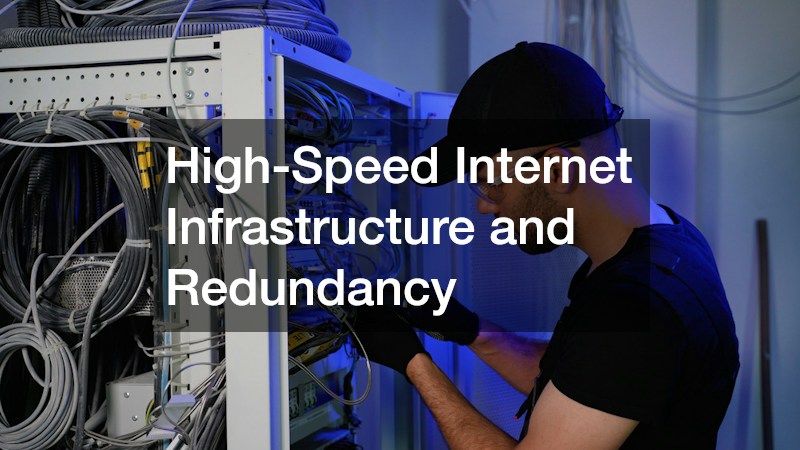
Reliable internet is non-negotiable for most businesses, yet many tenants only discover a building’s connectivity limitations after they have already moved in. Ask whether the building offers multiple internet service provider options or if you are locked into a single carrier, since limited choice often means higher prices and less bargaining power. Redundant fiber lines, meaning a secondary connection that kicks in automatically if the primary one fails, can prevent costly downtime during an outage.
It also helps to ask about the building’s bandwidth capacity relative to the number of tenants sharing it, because a building that looks modern on paper can still suffer from slow speeds during peak hours. Request documented uptime statistics from the property manager rather than relying on verbal assurances.
- Ask which internet providers currently service the building
- Request uptime guarantees in writing, ideally with service credit clauses
- Find out if fiber redundancy is standard or an additional cost
- Confirm whether conference rooms have dedicated bandwidth for video calls
Air Quality and Ventilation Sensors
Indoor air quality has become a bigger concern for tenants since the pandemic, and many newer buildings now install sensors that track carbon dioxide levels, humidity, and particulate matter in real time. These systems can automatically increase fresh air intake when air quality dips, which matters for employee comfort and long-term health. If you are evaluating an office space rental for a growing team, understanding the building’s ventilation standards can be just as important as the square footage or layout.
Some landlords display air quality data on public dashboards or mobile apps, giving tenants an easy way to verify that filtration systems are actually working rather than taking it on faith. Ask whether filters are rated for capturing fine particulates and how often they are replaced, since this detail is often overlooked during lease negotiations.
- Ask for the building’s air changes per hour rating
- Find out if filtration meets MERV 13 or higher standards
- Check whether sensor data is shared with tenants or kept internal
- Ask how quickly the system responds to detected air quality issues
Lighting Automation and Occupancy Sensors
Motion-activated lighting and daylight harvesting systems, which adjust artificial light based on how much natural light is entering a room, can meaningfully reduce a building’s energy use and your share of common area maintenance fees. These systems also tend to extend the life of light fixtures since bulbs are not running in empty rooms all day. Ask whether the lighting system can be customized for your specific suite or if settings are controlled only at the building level.
- Confirm whether occupancy sensors cover private offices as well as common areas
- Ask if lighting schedules can be adjusted for early arrivals or late shifts
- Find out whether the system logs energy savings you can reference later
- Check if emergency lighting is integrated with the same smart system or operates independently
Building Management Apps and Maintenance Requests
Many commercial buildings now offer a tenant-facing app that handles everything from submitting maintenance tickets to reserving shared conference rooms and loading docks. A responsive system like this can save significant time compared to the old model of calling a property manager and waiting for a callback. Before signing anything, ask to see the app in action and find out the average response time for common requests like HVAC repairs or plumbing issues.
It is also worth checking whether the app tracks the status of open requests so you are not left wondering if an issue has been addressed. A building that treats its app as an afterthought rather than a real communication tool often reflects a broader lack of attention to tenant needs.
- Ask for a live demo of the maintenance request process
- Check average resolution times for recent tenant complaints
- Find out if the app supports multiple users per company account
- Confirm whether emergency issues get a separate, faster response channel
Conclusion
Smart building features can genuinely improve daily operations, cut costs, and make your workspace healthier and more secure, but only if they are implemented thoughtfully and backed by real support. Before you sign anything, ask for documentation, request live demonstrations, and talk to current tenants about their actual experience with the technology. Taking these extra steps now can save you from costly surprises and ensure the building truly fits how your team works.