
The metalworking and industrial contracting sectors operate within a volatile macroeconomic landscape. Business owners, plant managers, and operations directors face a relentless squeeze on profit margins. Raw material costs fluctuate unpredictably, skilled labor remains in short supply, and clients demand faster turnaround times without a corresponding increase in budget. In this high-stakes environment, long-term profitability cannot be achieved simply by increasing sales volume. True financial health and operational resilience are built from the inside out by identifying internal inefficiencies, eliminating wasteful movement, and squeezing maximum productivity out of every machine stroke and labor hour.
Workplace efficiency in a metal business requires a systematic approach that bridges the gap between high-level logistics and shop-floor execution. When a facility operates inefficiently, the symptoms are visible everywhere: raw materials congesting primary walkways, skilled technicians waiting for forklift operators to move parts, excessive scrap generation, and field installation crews sitting idle because shop drawings were miscommunicated. Conversely, a highly optimized metal operation functions like a finely tuned machine, where material moves seamlessly from receiving to processing, assembly, and final deployment.
By modernizing shop floor layouts, standardizing high-precision technical workflows, locking down reliable local supply chains, and establishing proactive asset recovery programs, companies can significantly increase their throughput. This comprehensive blueprint details actionable structural and behavioral shifts that turn standard operational challenges into distinct competitive advantages, protecting your bottom line while elevating your market reputation.
Optimizing Floor Layouts and Material Flow
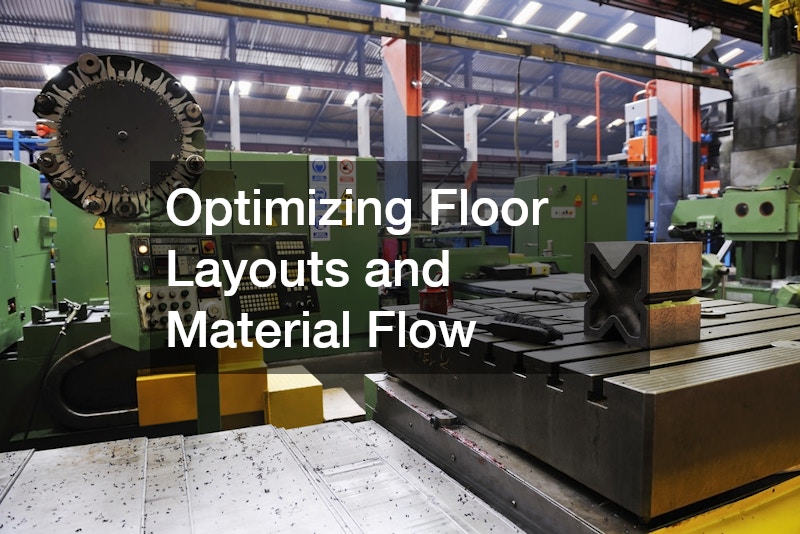
Implement Cellular Manufacturing to Eliminate Wasted Motion
Every time a piece of heavy steel or aluminum is lifted, transported, or restaged unnecessarily, a business loses money. In traditional shop environments, machinery is often organized by function: all cutting saws are in one corner, bending brakes are in another, and finishing stations are down the hall. This batch-and-queue approach results in a chaotic, zigzagging material flow that wastes valuable labor hours and introduces numerous opportunities for material damage or workplace accidents. To optimize throughput, modern facilities must adopt the principles of cellular manufacturing.
Cellular manufacturing involves reorganizing the shop floor into self-contained production cells. Each cell contains all the tools and machinery required to perform a specific sequence of operations on a family of parts. For example, a cell dedicated to bracket production might include a dedicated small-format plasma cutter, a deburring station, and a hydraulic press brake arranged in a tight U-shaped configuration. This setup allows a single operator to move a part from raw stock to finished component without ever walking more than a few steps, eliminating the need for intermediary forklift transport.
- Map the Value Stream: Before moving a single machine, physically track the path a standard product takes through your facility. Draw this path on a blueprint to expose backtracking, overlapping routes, and excessive travel distances.
- Establish Dedicated Staging Zones: Mark the floor with high-visibility safety paint to designate precise zones for raw materials, work-in-progress components, and completed orders. Never allow materials to overflow into main transit aisles.
- Apply the 5S Methodology: Implement a strict regimen of Sorting, Setting in order, Shining, Standardizing, and Sustaining across every cell. Every tool must have a shadowed, labeled location on a workbench, ensuring operators waste zero seconds looking for a specific clamp or gauge.
When setting up a high-output production line, mapping the exact path of raw steel through the various stages of metal fabrication prevents costly bottlenecks. The goal is to keep materials moving forward in a continuous stream rather than allowing them to pile up between operations. Experienced metal fabricators know that even saving three minutes of transport time per part can compound into hundreds of extra output hours annually, drastically reducing overall lead times for clients.
Elevating Precision in the Assembly and Joining Phases

Standardize Welder Training and Jig Utilization for Consistent Quality
Assembly and joining are often the primary bottlenecks in a custom production environment. Unlike computer-controlled cutting or punching machines, welding and fitting rely heavily on manual human skill. This human element introduces variability in speed, technique, and quality control. If components are built with slight dimensional variances early in the process, the errors compound during assembly, leading to extensive, expensive rework, field modifications, and missed shipping deadlines.
To inject efficiency into the assembly phase, businesses must move away from a reliance on ad-hoc fixture building. For every custom job, technicians often spend hours welding temporary jigs out of scrap material just to hold parts in place. This time is completely non-value-added. By investing in modular, high-precision tooling systems and enforcing standardized welding procedures, shops can dramatically slash setup times while guaranteeing that the first part produced matches the thousandth part precisely.
- Deploy Modular Fixturing Tables: Equip your assembly stations with precision-ground, perforated welding tables. These systems use standardized pins, clamps, and stops that allow an operator to assemble a highly complex holding jig in minutes rather than hours.
- Enforce Standardized Welding Procedures: Document specific voltage, wire-feed speed, gas flow, and travel speed settings for every material thickness and joint configuration. Do not leave these variables to the individual preference of the technician.
- Implement First-Article Inspections: Require a dedicated quality assurance check on the very first part pulled from an assembly jig before allowing full production to proceed. This prevents a systematic jig alignment error from ruining an entire batch.
For structural projects, forward-thinking welding companies rely on automated welding tractors to maintain flawless consistency over long seams. These automated systems remove human fatigue from the equation, resulting in uniform penetration and minimal spatter. Precision is equally vital for sheet metal fabricators, where a single millimeter of misalignment during the bending phase can ruin an entire production run. Standardizing these processes ensures that components drop into assembly fixtures perfectly every time, reducing reliance on grinders, hammers, and pry bars to force fitments.
Strategic Material Sourcing and Inventory Management
Establish Just-In-Time (JIT) Delivery with Reliable Local Supply Chains
Carrying an excessive amount of raw material inventory is an invisible drain on a metal business’s financial resources. Storing stacks of sheet metal, bundles of structural tubing, and crates of hardware ties up vital working capital that could be better used for equipment upgrades or workforce development. Furthermore, excess inventory consumes valuable square footage on the shop floor, creating physical congestion and increasing the risk of material degradation through moisture exposure or accidental forklift damage.
Transitioning to a leaner inventory model, such as Just-In-Time inventory management, requires a radical shift in how vendor relationships are structured. Instead of purchasing massive quantities of material months in advance to secure a volume discount, efficient shops build deep, strategic alliances with vendors who can deliver smaller, precise batches exactly when they are scheduled to hit the production floor. This requires open lines of digital communication and a high level of operational trust.
- Establish Blanket Purchase Agreements: Negotiate long-term contracts that lock in predictable material pricing based on annual volume commitments, but arrange for weekly or bi-weekly staggered deliveries.
- Integrate Digital Inventory Alerts: Implement digital inventory tracking software that utilizes barcode or RFID scanning on the shop floor. Set strict minimum stocking thresholds that automatically trigger reorder requests before a stockout occurs.
- Conduct Supplier Scorecarding: Evaluate your material vendors monthly based on delivery punctuality, material certification accuracy, and packaging integrity. A vendor who consistently delivers late or damaged material is fundamentally incompatible with an efficient workflow.
Partnering with a flexible metal supplier ensures that your shop floor is never paralyzed waiting for a critical shipment of raw beams or sheets. When your inventory footprint is small, your operation remains nimble and adaptive. Sourcing materials from a local metal supplier reduces lead times and shipping costs, allowing you to react quickly to sudden project scope changes without keeping hundreds of thousands of dollars in capital rotting on your racks.
Operational Optimization for Field Installation and Contracting

Synchronize Shop Prep with On-Site Assembly to Minimize Downtime
For metal businesses that handle both off-site manufacturing and on-site field installation, the transition point between the shop and the job site is a frequent source of operational failure. If field crews arrive at a site only to discover that critical brackets are missing, or that panels were fabricated to the wrong field dimensions, project profitability evaporates immediately. Field labor is exponentially more expensive than shop labor, meaning that every hour spent modifying parts on a construction site directly erodes the project’s bottom line.
Maximizing efficiency in the field requires treating the job site as a direct extension of the manufacturing facility. This means maximizing the amount of fabrication work performed in a controlled shop environment, where overhead cranes, stable power sources, and precise measuring tools are readily available. Components should leave the shop as complete, modular assemblies that can be rapidly bolted together on-site with minimal field welding, cutting, or drilling.
- Implement a Rigorous Kitting Strategy: Never ship bulk parts to a job site in loose boxes. Group all necessary panels, structural elements, fasteners, and specific installation drawings into job-specific, numbered crates.
- Utilize Digital Field-to-Shop Modeling: Use 3D building information modeling software to capture accurate field measurements via laser scanning before fabrication begins. This ensures that custom elements fit around existing site obstructions perfectly.
- Optimize Logistics Scheduling: Coordinate delivery schedules so that heavy components arrive at the construction site in the exact sequence they are needed for installation, preventing double-handling or storage issues on-site.
When managing commercial installations, preparing architectural metal roofing panels in a controlled shop environment prevents weather-related delays on-site. By pre-cutting and pre-punching panels to exact lengths indoors, the field crew’s role shifts from fabrication to pure assembly. Additionally, a certified local metal roofer can maximize daily output by deploying specialized lifting equipment that accelerates panel placement, reducing crane rental times and ensuring the structure is enclosed swiftly.
Maximizing Resource Recovery and Value-Added Services
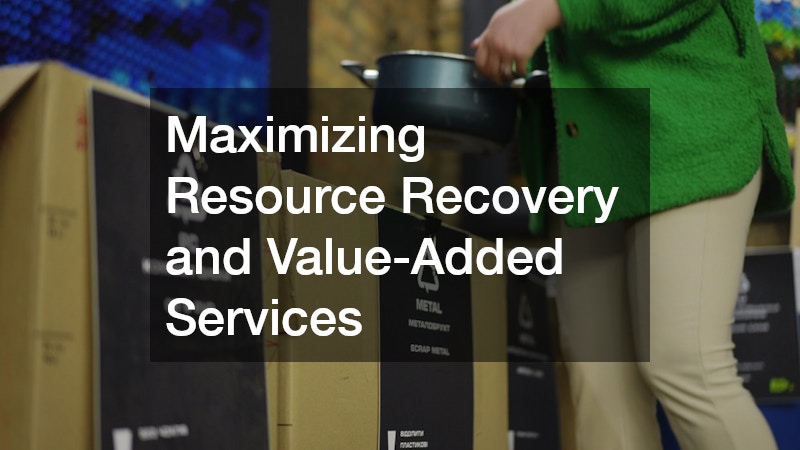
Turn Production Waste into a Secondary Revenue Stream
In any metalworking operation, material waste is an unavoidable reality. Off-cuts, laser drops, stamping skeletons, and machining turnings represent a significant portion of the raw material weight originally purchased. If this material is treated as garbage and thrown into an unsegregated dumpster, the business is essentially throwing cash straight into the landfill. Efficient material resource management requires both minimizing the initial creation of waste and maximizing the financial recovery value of the waste that is generated.
Minimizing waste starts in the engineering and programming phase. Utilizing advanced computer nesting software allows engineers to arrange parts on a sheet of metal with optimal spacing, squeezing out the highest possible yield per square foot. However, for the material that cannot be utilized, an organized, clean segregation system must be established right at the point of production. Mixing different alloys or contaminating clean metal scrap with oil, garbage, or floor sweepings drastically reduces its value at the processing facility.
- Deploy Color-Coded Material Bins: Place clearly labeled, color-coded recycling hoppers directly at every cutting and machining station. Separate high-value alloys like aluminum and stainless steel from standard carbon steel.
- Invest in Chip Processors and Centrifuges: For machining intensive environments, processing turnings through a centrifuge reclaims expensive cutting fluids while compressing bulky, loose chips into dense, high-value briquettes.
- Expand In-House Processing Offerings: Transition your business from a simple component manufacturer into an end-to-end processing partner by offering value-added services like precision leveling, priming, or kitting before delivery.
Setting up an organized system for scrap metal recycling directly on the shop floor turns baseline waste back into usable capital that offsets the initial cost of raw materials. Furthermore, integrating processing capabilities with broader metal supply services allows businesses to deliver pre-cut, production-ready components straight to their buyers, command premium pricing, and secure a tighter grip on the regional supply chain.
Building a highly efficient workplace within the metal sector is a continuous process of operational refinement rather than a single administrative overhaul. By rethinking shop layout ergonomics, standardizing technical execution, optimizing vendor logistics, and reclaiming value from production byproducts, industrial businesses can construct a resilient operation capable of weathering any economic storm. Eliminating bottlenecks on the shop floor and in the field directly translates to shorter lead times, enhanced product quality, and significantly healthier profit margins. Commit to auditing your workflows, empower your operators with the right tools, and transform your production facility into a benchmark of modern industrial efficiency.